
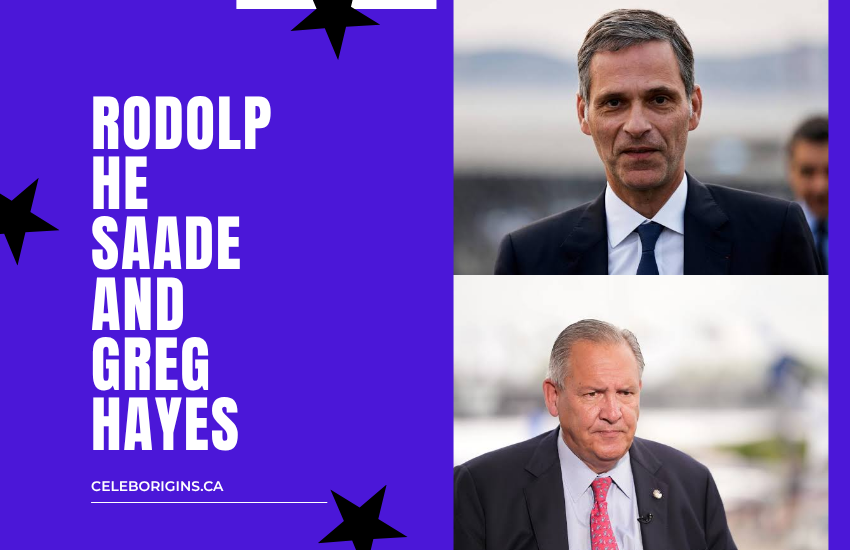
Rodolphe Saadé and Greg Hayes are influential business executives whose careers have shaped two very different areas of the global economy. Saadé is closely associated with CMA CGM, the international shipping and logistics group founded by his father, Jacques Saadé, while Hayes built his reputation in aerospace, defense, and industrial manufacturing through United Technologies Corporation (UTC) and Raytheon Technologies, now known as RTX Corporation. Their professional backgrounds reveal how leadership, strategic investment, and operational discipline can influence multinational companies across different industries.
Despite occasional online searches connecting their names, there is no verified direct business partnership or shared corporate venture between Rodolphe Saadé and Greg Hayes established by the information provided for this comparison. Their relevance to one another lies primarily in their positions as senior leaders of large international businesses, rather than in a documented professional relationship. Understanding their individual careers helps explain why both attract attention from readers interested in corporate leadership, global trade, industrial innovation, and business strategy.
Personal Information and Executive Profiles
| Attribute | Rodolphe Saadé | Greg Hayes |
|---|---|---|
| Full name | Rodolphe Saadé | Gregory J. Hayes |
| Main industry | Shipping, maritime transport, logistics | Aerospace, defense, industrial manufacturing |
| Major company | CMA CGM | RTX Corporation, formerly Raytheon Technologies |
| Leadership role | Chairman and CEO of CMA CGM | Former chairman and CEO of Raytheon Technologies |
| Career background | International shipping and family-business leadership | Finance, corporate management, aerospace and defense |
| Major milestone | Expanding CMA CGM’s shipping, logistics, and media interests | Leading the 2020 UTC–Raytheon merger |
| Business focus | Global freight movement and supply chain services | Aircraft systems, propulsion, defense technology |
| Professional connection | No verified direct partnership with Greg Hayes | No verified direct partnership with Rodolphe Saadé |
The most important distinction between the two executives is the type of business each has managed. Rodolphe Saadé operates in a sector that moves goods between continents, connecting manufacturers, exporters, importers, ports, and distribution networks. Greg Hayes’s executive career, by contrast, centered on businesses that design, manufacture, and support complex technologies used in commercial aviation, defense, and industrial markets. Although both sectors are essential to international commerce, they depend on different customers, technical capabilities, investment cycles, and regulatory requirements.
Their leadership paths also developed differently. Saadé inherited a prominent position within a family-founded enterprise and became a central figure in its continued international expansion. Hayes advanced through corporate management, developing extensive experience in financial oversight, operational performance, and large-scale organizational change before leading one of the aerospace industry’s most consequential mergers. These differences provide useful context for understanding their achievements without assuming that their careers overlapped.
Another relevant distinction concerns corporate responsibility. A shipping executive must balance vessel capacity, freight demand, port access, fuel costs, and disruptions across international trade routes. An aerospace and defense executive must oversee manufacturing quality, engineering programs, long-term contracts, regulatory compliance, and substantial research and development commitments. Comparing Saadé and Hayes therefore offers a broader look at how executives adapt their leadership methods to the demands of their industries.
Rodolphe Saadé: Building a Global Shipping and Logistics Business
Rodolphe Saadé’s career is closely linked to the growth of CMA CGM, a French shipping and logistics group established by Jacques Saadé in 1978. The company developed from its original maritime operations into a major international container shipping business, serving trade routes that connect businesses and consumers around the world. Rodolphe became increasingly involved in the organization before taking on its top leadership responsibilities. His rise illustrates how a successor in a family-founded business can preserve its original commercial strengths while pursuing new opportunities for growth.
As chairman and chief executive, Saadé has helped guide the group through changing conditions in global shipping. Container transportation is a capital-intensive industry in which companies must invest in vessels, equipment, digital systems, and supporting infrastructure while responding to fluctuations in international demand. Shipping businesses also face changing fuel prices, environmental requirements, port congestion, geopolitical tensions, and disruptions to major trade routes. Saadé’s responsibilities therefore extend beyond expanding the fleet; they include balancing immediate operational pressures with the long-term investments needed to remain competitive.
CMA CGM’s development has also extended beyond maritime transportation into broader logistics activities and media interests. This diversification reflects a strategy of building a business that can participate in more stages of the movement and distribution of goods while exploring opportunities outside its original market. Logistics services can help customers coordinate transportation, warehousing, and distribution instead of relying on separate providers for every stage. However, diversification also introduces management challenges because each business requires its own expertise, investment priorities, and performance measures. Saadé’s leadership is consequently associated with both the preservation of a shipping heritage and the evolution of a multinational group.
Greg Hayes: Corporate Leadership in Aerospace and Defense
Greg Hayes built his career through United Technologies Corporation, commonly known as UTC, where he developed a background in finance, management, and corporate operations. UTC had a substantial industrial portfolio, including businesses involved in aircraft engines, aerospace systems, and building technologies. His progression through the company’s leadership structure provided experience in managing large operations, overseeing financial performance, and making strategic decisions across businesses with different customers and technical requirements. This background prepared him for the challenges of leading a major aerospace and defense organization.
One of the defining milestones of Hayes’s career was the 2020 combination of UTC and Raytheon Company. The transaction created Raytheon Technologies, which was subsequently renamed RTX Corporation, bringing together significant commercial aerospace and defense capabilities under one corporate structure. The merger aimed to combine complementary technologies and expertise while creating opportunities for research, engineering, manufacturing, and customer relationships across the organization. Integrating two large companies, however, required more than combining their assets: leadership also had to address organizational structures, corporate cultures, business priorities, and the practical complexities of coordinating global operations.
Hayes’s executive responsibilities involved balancing commercial aviation’s long investment cycles with the different demands of defense programs. Aircraft manufacturers and airlines depend on reliable engines, components, maintenance, and technical support, while defense customers require advanced systems that meet demanding performance and security requirements. Both areas involve complex engineering, extensive testing, strict quality standards, and significant regulatory oversight. These conditions make operational discipline particularly important because delays, manufacturing defects, or cost overruns can have consequences far beyond a single production facility. Hayes’s leadership legacy is therefore closely associated with large-scale corporate integration and the management of technically demanding businesses.
Rodolphe Saadé and Greg Hayes: Is There a Verified Business Connection?
The central question behind the keyword rodolphe saade and greg hayes is whether the two executives have worked together or participated in a shared commercial venture. Based on the information supplied for this article, no verified direct partnership, joint venture, or shared corporate leadership arrangement has been established between them. Their names can appear together in business-related online content because both have led major multinational organizations, but being discussed in the same article does not establish a professional relationship. A factual comparison should keep that distinction clear.
Their principal corporate affiliations also point to separate operating environments. CMA CGM concentrates on maritime transport, container shipping, logistics, and related business activities, whereas RTX is associated with aerospace systems, aircraft propulsion, defense technologies, and other advanced industrial capabilities. These companies have different core products, customer relationships, technical requirements, and competitive landscapes. Although international shipping and aerospace manufacturing can intersect indirectly through the transportation of components, equipment, and finished products, that general economic connection does not demonstrate that Saadé and Hayes collaborated personally or commercially.
Claims about corporate relationships require evidence that goes beyond a shared industry-wide interest in international commerce. Useful evidence might include an official company announcement, a disclosed joint venture, a documented board appointment, a signed strategic agreement, or a credible report identifying the executives’ participation in a specific transaction. The supplied information does not establish such a link between Saadé and Hayes. Accordingly, the most accurate conclusion is that they are independently prominent executives whose careers can be compared, but a direct business partnership between them should not be presented as fact without additional reliable documentation.
Comparing Their Leadership Styles and Business Strategies
Rodolphe Saadé and Greg Hayes offer two different examples of executive leadership shaped by their organizations’ histories and commercial environments. Saadé’s role involves developing a family-founded company while maintaining its position in international shipping and expanding its broader business interests. This requires decisions about fleet capacity, network efficiency, logistics capabilities, customer relationships, and investment in new services. Hayes’s leadership experience was more closely connected to managing established industrial businesses, improving operational performance, and reshaping corporate structures through strategic transactions. Neither approach is universally superior; each responds to the opportunities and risks inherent in its sector.
Their approaches to growth also illustrate an important distinction between expanding an existing enterprise and combining major organizations. For a shipping group, growth can involve adding capacity, improving access to trade routes, developing logistics services, or entering related markets. Such decisions must account for volatile freight rates, the cost of operating vessels, and the possibility that demand may weaken after substantial investments have been made. For an aerospace and defense manufacturer, growth may depend on developing new technologies, securing long-term contracts, acquiring complementary capabilities, or integrating businesses that serve overlapping markets. Hayes’s role in the UTC–Raytheon merger illustrates how corporate consolidation can become a central part of an executive’s strategic agenda.
Risk management is another area in which the executives’ responsibilities can be compared. Shipping companies are exposed to disruptions at ports and on major maritime routes, changing trade patterns, environmental regulations, and fluctuations in transportation demand. Aerospace and defense businesses face risks involving engineering complexity, production schedules, certification, government procurement, and long-term program costs. Leaders in both sectors must make decisions with incomplete information while protecting financial stability and customer confidence. Their careers demonstrate that effective corporate leadership depends not simply on pursuing growth, but on understanding where risks originate and building systems that allow an organization to respond.
Their Global Economic Influence and Long-Term Business Challenges
CMA CGM operates within the international supply chain that allows raw materials, manufactured goods, food products, and consumer merchandise to move between markets. Its shipping and logistics activities help connect producers with retailers, manufacturers with suppliers, and exporters with overseas customers. Decisions made by large shipping groups can influence available transport capacity, service reliability, and the efficiency of cargo movement, although broader freight prices and delivery conditions also depend on competition, demand, fuel costs, and infrastructure. Under Saadé’s leadership, the group’s strategic choices are relevant to businesses that depend on dependable international transportation.
RTX occupies a different but equally important position in the global economy through aerospace and defense technology. Its businesses support commercial aviation with engines, components, systems, and services, while its defense activities supply technologies used by government and military customers. These markets require sustained investment in engineering, research, manufacturing quality, and specialized talent. Their commercial cycles can differ substantially from those of shipping companies because aircraft programs and defense contracts often extend over many years. Hayes’s leadership at Raytheon Technologies placed him at the center of decisions involving corporate scale, technological capability, and the integration of major industrial operations.
Both executives’ professional legacies must also be considered against long-term pressures affecting their industries. Shipping companies are working to improve operational efficiency and address emissions, while evaluating alternative fuels, vessel designs, and cleaner transportation technologies. Aerospace and defense companies face their own demands, including efficient aircraft operations, supply-chain resilience, production capacity, cybersecurity, and the development of increasingly sophisticated systems. For both sectors, investments must be judged against uncertain future demand, regulatory expectations, and financial constraints. The comparison between Saadé and Hayes ultimately highlights a shared leadership challenge: sustaining competitiveness today while preparing a large organization for the demands of tomorrow.
What Readers Should Understand About Rodolphe Saadé and Greg Hayes
The strongest reason to examine Rodolphe Saadé and Greg Hayes together is the contrast between their professional backgrounds. Saadé represents leadership in global shipping and logistics, where the central challenge is moving goods efficiently across a complex international network. Hayes represents leadership in aerospace, defense, and industrial manufacturing, where engineering capability, production quality, technical innovation, and large-scale corporate management are essential. Looking at both careers provides a useful way to understand how different industries shape executive decisions. It also helps distinguish meaningful professional similarities from assumptions based only on corporate prominence.
Their corporate milestones demonstrate two different paths to organizational development. Saadé’s career has been shaped by the evolution of CMA CGM from a family-founded shipping business into a broader international group with maritime, logistics, and media interests. Hayes became especially prominent for leading Raytheon Technologies through the combination of UTC and Raytheon, a major restructuring of the aerospace and defense landscape. One story emphasizes succession, continuity, and diversification; the other emphasizes corporate integration and the management of complex industrial portfolios. Both require long-term planning, but the circumstances and methods differ.
For readers researching a possible relationship between these executives, the most important point is to separate verified facts from speculation. The information provided for this article does not establish a direct partnership, joint venture, shared board position, or other formal corporate relationship between Saadé and Hayes. Their careers can still be compared meaningfully because both involve international operations, substantial investments, and high-stakes strategic decisions. Unless credible documentary evidence establishes a more specific connection, their shared appearance in search results should be understood as a comparison of two business leaders rather than evidence that they worked together.
Conclusion
Rodolphe Saadé and Greg Hayes have built influential careers in different sectors of the global economy. Saadé is known for expanding CMA CGM’s shipping and logistics operations, while Hayes made his mark in aerospace and defense through his leadership at United Technologies and Raytheon Technologies. Although both executives have managed complex multinational businesses and made significant strategic decisions, no verified direct business partnership between them has been established. Their careers are best understood as separate examples of corporate leadership, long-term planning, and industry-specific growth. Comparing their achievements highlights how successful executives adapt their strategies to different markets while navigating global challenges and changing business priorities.
